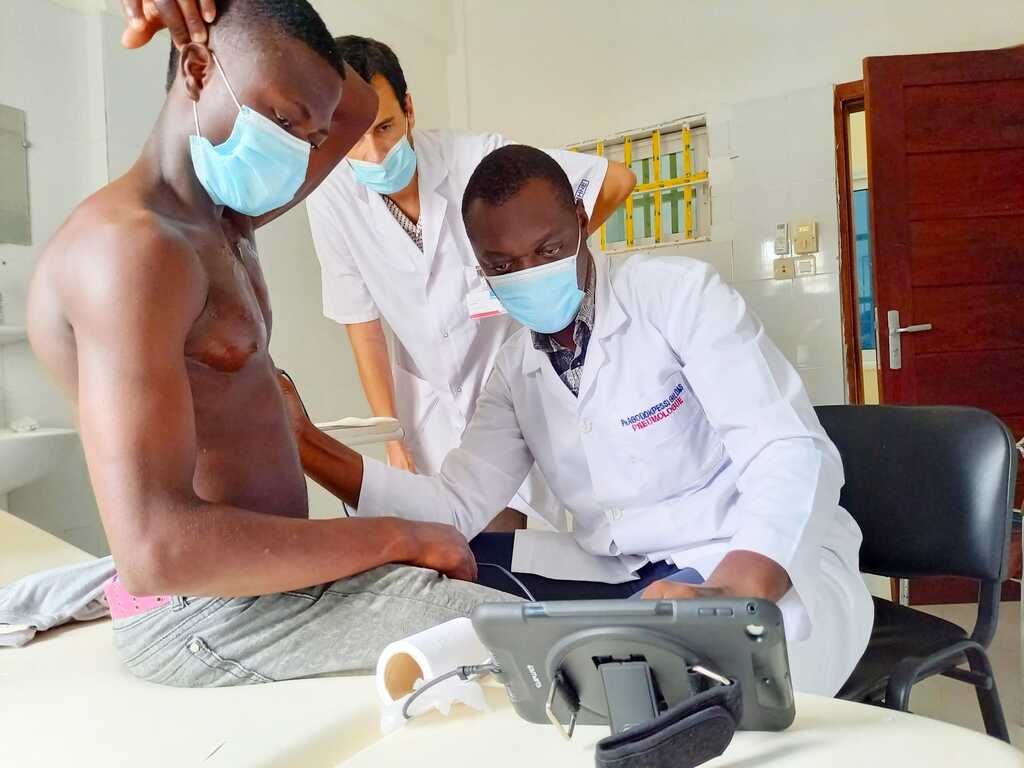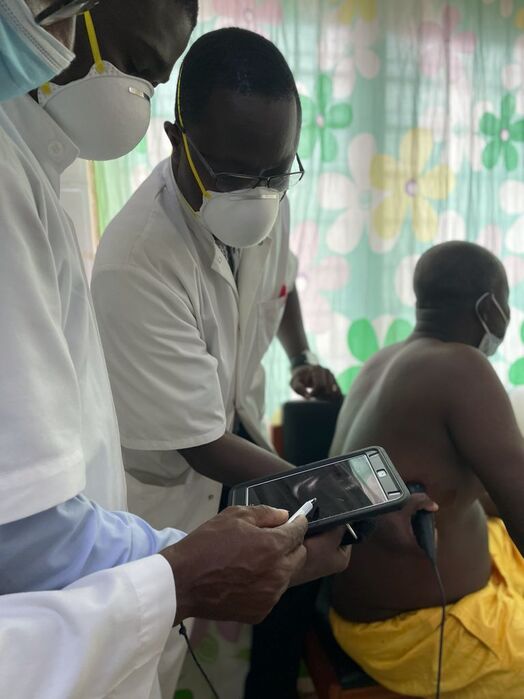
Tuberculosis (TB) remains a significant healthcare challenge in sub-Saharan Africa. Access to standard diagnostic tools for TB is limited in many primary healthcare facilities. Chest X-rays and WHO-recommended molecular tests are often not available. As an affordable, non-invasive and portable tool, lung ultrasound offers a potential alternative for diagnosis. However, its use for TB diagnosis is currently limited due to the need for specialist knowledge to interpret images.
The CAD LUS4TB project aims to develop and validate a novel digital technology based on lung ultrasound. This will involve adapting image-based analysis tools and software for mobile phone ultrasound applications. The technology will support primary healthcare workers in ruling out TB and guiding patient management quickly.
The consortium will collect data from a large, diverse cohort in Benin, Mali, and South Africa with 3000 adult patients, develop and validate tailored AI models, integrate these models into user-friendly digital tools; and assess the tools' feasibility, cost, and impact.
By generating context-specific evidence, CAD LUS4TB will inform policy and support the integration of AI-assisted lung ultrasound into routine primary healthcare. Ultimately, the project seeks to improve the early detection of TB, strengthen health systems, and expand access to quality care for the communities most affected by the disease.
CAD LUS4TB brings together partners from Africa and Europe with expertise in clinical research, diagnostics, implementation science, social science, health economics, policy translation, and data and computer science. The project is coordinated by Stellenbosch University in South Africa, with Université d’Abomey-Calavi in Benin and Swiss Federal Technology Institute of Lausanne (EPFL) serving as scientific co-leads.